

In high-risk industries such as chemical, petrochemical, and natural gas, SIS safety instrumented systems are often referred to as the "last line of defense". This sentence sounds hard, but the real danger lies in the fact that many accidents are not caused by the system not being installed, but by the system being installed but unreliable, and not acting as expected at critical moments.
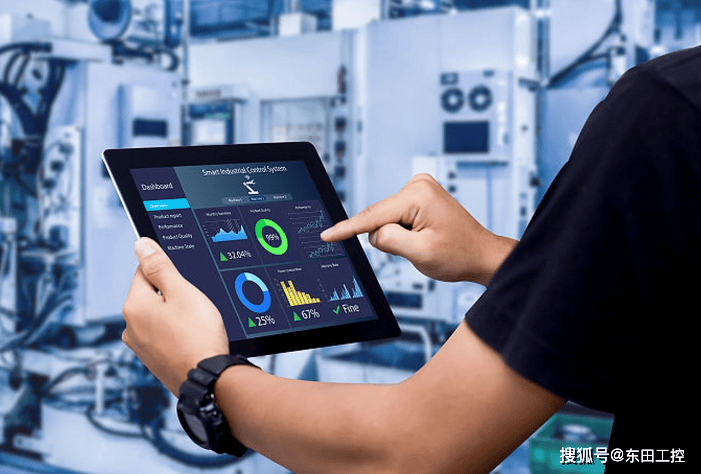
Improper design selection, inadequate maintenance, prolonged testing delays, and the use of detours as habitual actions can all turn the 'last line of defense' into mere decoration. More realistically, the failure of SIS is often not sudden, but rather dragged down by a little bit of loose management and technical deviation.
This article connects the key points of the entire lifecycle of SIS from design to evaluation, providing you with a standardized checklist that can be directly implemented. It can be used for daily inspections, internal audits, contractor management, and even as a reference tool when facing external evaluations. The key is not to list items, but to ensure that each check can answer a question: whether this line of defense is still effective.
What is the core value of SIS
Many newcomers will understand SIS as "advanced interlocking". But from the perspective of functional safety system, the value of SIS is not alarm, but risk reduction. It undertakes the protection function for high consequence scenarios. When the process deviates from the danger boundary, SIS must perform specified actions within the specified time to bring the risk back to the controllable range.
So to judge whether SIS is good or not, don't look at whether the picture is beautiful, don't look at whether there are many focal points, but look at three things. The first is whether it is targeted at the correct dangerous scenario, the second is whether the risk reduction is sufficient, and the third is whether the action chain is verifiable, traceable, and maintainable.
Design and selection compliance check
The first type of problem always arises during the design phase. If risks are identified incorrectly during the design phase, no matter how much maintenance is done later, it will only be maintaining an incorrect solution.
Risk analysis and SIL determination
Firstly, it is necessary to confirm whether the hazardous scene has been systematically identified. The common method is to use HAZOP for scene recognition, and LOPA for quantitative or semi quantitative determination of whether the protective layer is sufficient, in order to determine the required SIL level.
The key here is not whether it has been done before, but whether it can stand up. It depends on whether the scene covers the entire process, including startup and shutdown, abnormal working conditions, external energy supply interruption, instrument failure, and other situations. It depends on whether the triggering conditions, action objectives, response time, and final state of each safety instrument function are clear. It depends on whether there is a clear tendency for low SIL in the determination of SIL, such as only low SIL in high consequence scenarios, or using measures that rely on manual response as a reliable protective layer.
More importantly, the analysis records must be complete, the assumptions must be clear, and reviewed by qualified third parties or experts. Because SIS design failures are often not due to miscalculations, but rather to incorrect assumptions.
Component selection and certification
The hardware of SIS is not necessarily the more expensive the better, but it needs to be verifiable. Sensors, logic solvers, and final components should have traceable functional safety certifications and relevant proofs, commonly sourced from T Ü V certification or equivalent SIL capability statements. Having only an explosion-proof certificate cannot replace a functional safety certificate, and corrosion and temperature resistance are only environmental adaptability and do not represent reliability meeting requirements.
When selecting, it is important to focus on checking three types of risks. The first type is early failure caused by environmental mismatch, such as selecting unsuitable measuring components for high temperature and high corrosion conditions. The second type is common cause failure, where redundant configurations come from the same batch, same failure mode, or share the same pressure sampling structure. The third type is insufficient capacity of the final component. The root cause of many SIS failures is not logic failure, but valve jamming, insufficient actuator air supply, and locator performance drift, resulting in "failure to close".